
Versus Battle France Armed Forces vs C3 Admirals
- Thread starter Blackbeard
- Start date
More options
Who Replied?



@RayanOO
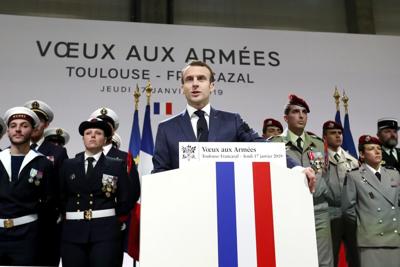

France forces as per global firepower statistics:
Scenario 1: Nuclear weapons restricted
Scenario 2: Nuclear weapons allowed
Scenario 3: France has access to both American and Russian nuclear weapons stock, Admirals are Domi Reversi'd
Discuss.
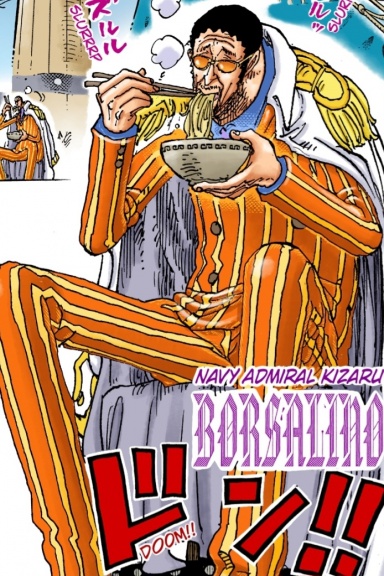
VS.
France forces as per global firepower statistics:
Scenario 1: Nuclear weapons restricted
Scenario 2: Nuclear weapons allowed
Scenario 3: France has access to both American and Russian nuclear weapons stock, Admirals are Domi Reversi'd
Discuss.

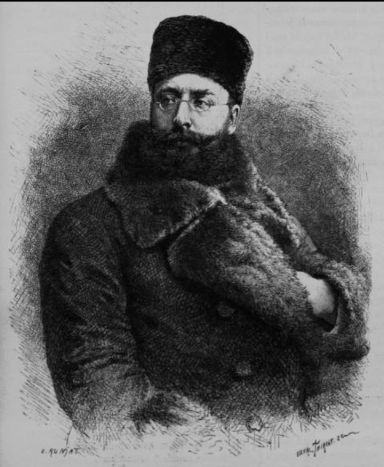
Dying of boredom? That cruel cur. 
First, boredom. The accusation of “boredom” presupposes that the burden of engagement rests on the speaker rather than the listener. This is not merely laziness — it is an oppressive assumption, a relic of a culture that privileges passive consumption over active thought. To declare oneself bored in the presence of rigor is to announce, proudly, that one’s attention span is a casualty of modern intellectual decay. The onus of meaning-making is collectivized; dialogue is a shared enterprise. To abdicate that responsibility, then, is to enact a subtle violence against discourse itself.
Second, “that cruel cur.” Cruelty implies intent to harm, yet what greater kindness exists than the attempt to enlighten? To dismantle misconceptions with precision is not malice — it is mercy. The surgeon’s scalpel may sting, but only because it pierces infection. The epithet “cur” thus reveals more about the accuser’s discomfort with being intellectually outpaced than about the accused’s supposed temperament.
And let us not forget the structural assumptions embedded in this mockery: that passion in argument is excess, that depth is indulgence, that articulation beyond tweet-length constitutes a kind of social trespass. These are the quiet mechanisms by which mediocrity sustains itself — the rhetorical policing of intellectual ambition.
So yes, if my posts induce boredom, then I offer my sincerest apology to your dopamine receptors. But perhaps the problem lies not in my verbosity, but in your dependence on brevity as validation. For the “cruel cur” you denounce is merely a mirror, and what you perceive as cruelty is your own unease at being confronted with unfiltered reasoning.
Ah, what a delightfully superficial dismissal — “Dying of boredom? That cruel cur.” A phrase that pretends to wound but collapses under the faintest analytical scrutiny. Let us dissect this, if only to relieve the conversation from the tyranny of glibness.
First, boredom. The accusation of “boredom” presupposes that the burden of engagement rests on the speaker rather than the listener. This is not merely laziness — it is an oppressive assumption, a relic of a culture that privileges passive consumption over active thought. To declare oneself bored in the presence of rigor is to announce, proudly, that one’s attention span is a casualty of modern intellectual decay. The onus of meaning-making is collectivized; dialogue is a shared enterprise. To abdicate that responsibility, then, is to enact a subtle violence against discourse itself.
Second, “that cruel cur.” Cruelty implies intent to harm, yet what greater kindness exists than the attempt to enlighten? To dismantle misconceptions with precision is not malice — it is mercy. The surgeon’s scalpel may sting, but only because it pierces infection. The epithet “cur” thus reveals more about the accuser’s discomfort with being intellectually outpaced than about the accused’s supposed temperament.
And let us not forget the structural assumptions embedded in this mockery: that passion in argument is excess, that depth is indulgence, that articulation beyond tweet-length constitutes a kind of social trespass. These are the quiet mechanisms by which mediocrity sustains itself — the rhetorical policing of intellectual ambition.
So yes, if my posts induce boredom, then I offer my sincerest apology to your dopamine receptors. But perhaps the problem lies not in my verbosity, but in your dependence on brevity as validation. For the “cruel cur” you denounce is merely a mirror, and what you perceive as cruelty is your own unease at being confronted with unfiltered reasoning.
First, boredom. The accusation of “boredom” presupposes that the burden of engagement rests on the speaker rather than the listener. This is not merely laziness — it is an oppressive assumption, a relic of a culture that privileges passive consumption over active thought. To declare oneself bored in the presence of rigor is to announce, proudly, that one’s attention span is a casualty of modern intellectual decay. The onus of meaning-making is collectivized; dialogue is a shared enterprise. To abdicate that responsibility, then, is to enact a subtle violence against discourse itself.
Second, “that cruel cur.” Cruelty implies intent to harm, yet what greater kindness exists than the attempt to enlighten? To dismantle misconceptions with precision is not malice — it is mercy. The surgeon’s scalpel may sting, but only because it pierces infection. The epithet “cur” thus reveals more about the accuser’s discomfort with being intellectually outpaced than about the accused’s supposed temperament.
And let us not forget the structural assumptions embedded in this mockery: that passion in argument is excess, that depth is indulgence, that articulation beyond tweet-length constitutes a kind of social trespass. These are the quiet mechanisms by which mediocrity sustains itself — the rhetorical policing of intellectual ambition.
So yes, if my posts induce boredom, then I offer my sincerest apology to your dopamine receptors. But perhaps the problem lies not in my verbosity, but in your dependence on brevity as validation. For the “cruel cur” you denounce is merely a mirror, and what you perceive as cruelty is your own unease at being confronted with unfiltered reasoning.


Bumgoku's propaganda helping the C3, Macron aura loss.
https://x.com/generalmcnews/status/1982131274203443358?s=46
https://x.com/generalmcnews/status/1982131274203443358?s=46



Ah, what a delightfully superficial dismissal — “Dying of boredom? That cruel cur.” A phrase that pretends to wound but collapses under the faintest analytical scrutiny. Let us dissect this, if only to relieve the conversation from the tyranny of glibness.
First, boredom. The accusation of “boredom” presupposes that the burden of engagement rests on the speaker rather than the listener. This is not merely laziness — it is an oppressive assumption, a relic of a culture that privileges passive consumption over active thought. To declare oneself bored in the presence of rigor is to announce, proudly, that one’s attention span is a casualty of modern intellectual decay. The onus of meaning-making is collectivized; dialogue is a shared enterprise. To abdicate that responsibility, then, is to enact a subtle violence against discourse itself.
Second, “that cruel cur.” Cruelty implies intent to harm, yet what greater kindness exists than the attempt to enlighten? To dismantle misconceptions with precision is not malice — it is mercy. The surgeon’s scalpel may sting, but only because it pierces infection. The epithet “cur” thus reveals more about the accuser’s discomfort with being intellectually outpaced than about the accused’s supposed temperament.
And let us not forget the structural assumptions embedded in this mockery: that passion in argument is excess, that depth is indulgence, that articulation beyond tweet-length constitutes a kind of social trespass. These are the quiet mechanisms by which mediocrity sustains itself — the rhetorical policing of intellectual ambition.
So yes, if my posts induce boredom, then I offer my sincerest apology to your dopamine receptors. But perhaps the problem lies not in my verbosity, but in your dependence on brevity as validation. For the “cruel cur” you denounce is merely a mirror, and what you perceive as cruelty is your own unease at being confronted with unfiltered reasoning.
First, boredom. The accusation of “boredom” presupposes that the burden of engagement rests on the speaker rather than the listener. This is not merely laziness — it is an oppressive assumption, a relic of a culture that privileges passive consumption over active thought. To declare oneself bored in the presence of rigor is to announce, proudly, that one’s attention span is a casualty of modern intellectual decay. The onus of meaning-making is collectivized; dialogue is a shared enterprise. To abdicate that responsibility, then, is to enact a subtle violence against discourse itself.
Second, “that cruel cur.” Cruelty implies intent to harm, yet what greater kindness exists than the attempt to enlighten? To dismantle misconceptions with precision is not malice — it is mercy. The surgeon’s scalpel may sting, but only because it pierces infection. The epithet “cur” thus reveals more about the accuser’s discomfort with being intellectually outpaced than about the accused’s supposed temperament.
And let us not forget the structural assumptions embedded in this mockery: that passion in argument is excess, that depth is indulgence, that articulation beyond tweet-length constitutes a kind of social trespass. These are the quiet mechanisms by which mediocrity sustains itself — the rhetorical policing of intellectual ambition.
So yes, if my posts induce boredom, then I offer my sincerest apology to your dopamine receptors. But perhaps the problem lies not in my verbosity, but in your dependence on brevity as validation. For the “cruel cur” you denounce is merely a mirror, and what you perceive as cruelty is your own unease at being confronted with unfiltered reasoning.

Fun fact, France won more wars then it lost.
War of Spanish succession - lost and bankrupt themselves
7 years war - lost all their new world colonies to Britain
Napoleonic wars - lost, unconditionally surrendered
Crimean war - won, although wasn't much of a victory
Franco-Prussian war - lost, prussians captured Paris, France surrendered and the prussian emperor was crowned at palace of Versailles
WWI - won, although it was mostly UK and US doing the heavy lifting.
WWII - lost, conquered
Vietnamese war - lost even with us support, humiliated
Algeria war of Independence - lost
So, France definitely didn't win more wars than they lost. And was humiliated most of the time. The only wars it won were with heavy support from us and UK.

You're going to have to elaborate because France lost almost every major war it participate in a humiliating fashion.
War of Spanish succession - lost and bankrupt themselves
7 years war - lost all their new world colonies to Britain
Napoleonic wars - lost, unconditionally surrendered
Crimean war - won, although wasn't much of a victory
Franco-Prussian war - lost, prussians captured Paris, France surrendered and the prussian emperor was crowned at palace of Versailles
WWI - won, although it was mostly UK and US doing the heavy lifting.
WWII - lost, conquered
Vietnamese war - lost even with us support, humiliated
Algeria war of Independence - lost
So, France definitely didn't win more wars than they lost. And was humiliated most of the time. The only wars it won were with heavy support from us and UK.
War of Spanish succession - lost and bankrupt themselves
7 years war - lost all their new world colonies to Britain
Napoleonic wars - lost, unconditionally surrendered
Crimean war - won, although wasn't much of a victory
Franco-Prussian war - lost, prussians captured Paris, France surrendered and the prussian emperor was crowned at palace of Versailles
WWI - won, although it was mostly UK and US doing the heavy lifting.
WWII - lost, conquered
Vietnamese war - lost even with us support, humiliated
Algeria war of Independence - lost
So, France definitely didn't win more wars than they lost. And was humiliated most of the time. The only wars it won were with heavy support from us and UK.
Its had a long history before that and numerous wars / battle / kings etc
(And some points in your list are weird choices)








You know France didn’t start in 1700 my friend
Its had a long history before that and numerous wars / battle / kings etc
(And some points in your list are weird choices)
Its had a long history before that and numerous wars / battle / kings etc
(And some points in your list are weird choices)
As far as the modern state military affairs ,France has a disastrous record.
As for the wars, I literally picked the first thing you would see in a European history book. The major wars in continental Europe.