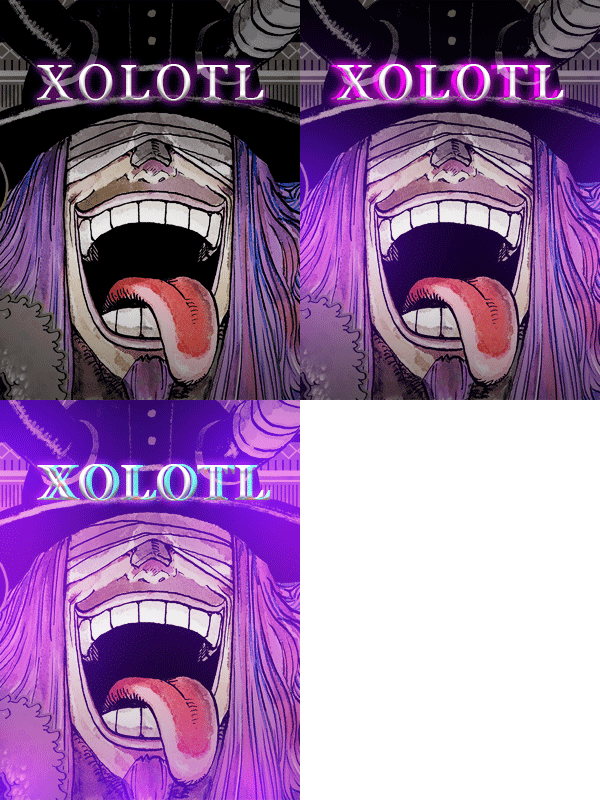
Oda seems to have already dropped major hints in Chapter 1171 about how Loki managed to kill his father, King Harald, despite Harald's apparent immortality.
The Niflheim - Yomi Connection
In that chapter, Loki unleashes an ice-based attack named Niflheim using his hammer Ragnir. This directly echoes Brook's ice powers from the Yomi Yomi no Mi (Revive-Revive Fruit), named after "Yomi," the Japanese underworld/land of the dead. Brook's chilling abilities stem from his soul's tie to the realm of death.
Niflheim in Norse mythology is a primordial realm of ice, mist, darkness and often associated with the underworld or land of the dead together with Helheim. Loki's use of Niflheim suggests his power (or his hammer's) connects to this same deathly/underworld domain.
This parallel leads to a compelling possibility: Loki bypasses immortality by targeting or manipulating the soul itself, rather than just the physical body.
How to Bypass Imu’s Covenant and Break Immortality
Imu's Covenant (Depths Covenant) appears to work by binding or controlling a person's soul. It anchors the soul to prevent it from departing upon "death," allowing rapid regeneration and effective immortality—as long as the soul tether remains intact. This explains why Covenant holders like the Elders or God's Knights are so hard to kill permanently.
If Loki's Niflheim ability draws from the realm of the dead, he could act as a sort of reaper—intercepting, severing, or collecting souls that would otherwise be preserved by Imu's Covenant. This would let him truly end an immortal life by disrupting that soul-level protection.
Brook's Endgame Role and His Connection to Gunko
This also massively elevates Brook's endgame relevance. As the "King of Soul" with his own direct link to the underworld (via Yomi), Brook likely has similar soul-targeting potential. He could become one of the few characters capable of permanently harming or killing Covenant immortals, including possibly the God's Knights—or even Imu.
Moreover, this ties beautifully into Brook's mysterious past connection with Gunko (revealed in Chapter 1149). Gunko, now seemingly a vessel possessed or controlled by Imu, shares a deep, forgotten history with Brook—possibly as a princess he once protected or even a familial bond (like a daughter figure). Brook's "chills of the underworld" could exploit that soul connection: by channeling death-realm energy, he might temporarily disrupt Imu's hold over Gunko's soul-tether, freeing her true consciousness and unlocking repressed memories of her past with the Soul King.
Conclusion:
Both Loki (via Niflheim) and Brook (via Yomi) wield powers rooted in the realm of the dead, granting them supernatural ice that strikes at the soul rather than merely the flesh. Their abilities position them as natural counters to Imu's immortality system. Their backstories also mirror each other through ties to the God's Knights/World Government—Loki via his father's doomed Covenant, and Brook via his cryptic, tragic link to Gunko.
Bonus:
Also think about it, Loki being locked up in the icy cold underworld of Elbaf seems to be a foreshadowing.
I forgot to add this


The Niflheim - Yomi Connection
In that chapter, Loki unleashes an ice-based attack named Niflheim using his hammer Ragnir. This directly echoes Brook's ice powers from the Yomi Yomi no Mi (Revive-Revive Fruit), named after "Yomi," the Japanese underworld/land of the dead. Brook's chilling abilities stem from his soul's tie to the realm of death.
Niflheim in Norse mythology is a primordial realm of ice, mist, darkness and often associated with the underworld or land of the dead together with Helheim. Loki's use of Niflheim suggests his power (or his hammer's) connects to this same deathly/underworld domain.
This parallel leads to a compelling possibility: Loki bypasses immortality by targeting or manipulating the soul itself, rather than just the physical body.
How to Bypass Imu’s Covenant and Break Immortality
Imu's Covenant (Depths Covenant) appears to work by binding or controlling a person's soul. It anchors the soul to prevent it from departing upon "death," allowing rapid regeneration and effective immortality—as long as the soul tether remains intact. This explains why Covenant holders like the Elders or God's Knights are so hard to kill permanently.
If Loki's Niflheim ability draws from the realm of the dead, he could act as a sort of reaper—intercepting, severing, or collecting souls that would otherwise be preserved by Imu's Covenant. This would let him truly end an immortal life by disrupting that soul-level protection.
Brook's Endgame Role and His Connection to Gunko
This also massively elevates Brook's endgame relevance. As the "King of Soul" with his own direct link to the underworld (via Yomi), Brook likely has similar soul-targeting potential. He could become one of the few characters capable of permanently harming or killing Covenant immortals, including possibly the God's Knights—or even Imu.
Moreover, this ties beautifully into Brook's mysterious past connection with Gunko (revealed in Chapter 1149). Gunko, now seemingly a vessel possessed or controlled by Imu, shares a deep, forgotten history with Brook—possibly as a princess he once protected or even a familial bond (like a daughter figure). Brook's "chills of the underworld" could exploit that soul connection: by channeling death-realm energy, he might temporarily disrupt Imu's hold over Gunko's soul-tether, freeing her true consciousness and unlocking repressed memories of her past with the Soul King.
Conclusion:
Both Loki (via Niflheim) and Brook (via Yomi) wield powers rooted in the realm of the dead, granting them supernatural ice that strikes at the soul rather than merely the flesh. Their abilities position them as natural counters to Imu's immortality system. Their backstories also mirror each other through ties to the God's Knights/World Government—Loki via his father's doomed Covenant, and Brook via his cryptic, tragic link to Gunko.
Bonus:
Also think about it, Loki being locked up in the icy cold underworld of Elbaf seems to be a foreshadowing.
Post automatically merged:
I forgot to add this
Last edited: