IMPORTANT: THIS TIME THERE WILL BE NO FIGHTS. YOU WILL SIMPLY VOTE FOR YOUR TOP 4 CHOICES HERE. PLEASE TRY TO USE UP ALL 4 VOTES. THANKS.
THE BRACKET
Uchiha Itachi - Naruto
VS
Sendo Takeshi - Hajime no Ippo
VS
Yoshikage Kira - JoJo's Bizarre Adventure: Diamond Is Unbreakable
VS
Sato Akira - The Fable
VS
Ouki - Kingdom
VS
Einar - Vinland Saga
VS
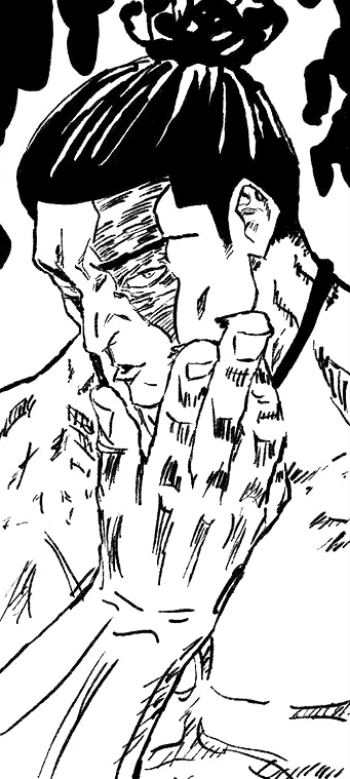
Pegasus - Goodnight Punpun
VS
Meruem - Hunter x Hunter
THE BRACKET
Uchiha Itachi - Naruto
Itachi is introduced as the older brother who massacred the Uchiha clan and left Sasuke alive. For much of the story, he appears to be a cold and ruthless criminal whose actions destroyed his younger brother's life. The later revelation that he acted under orders from Konoha's leadership, seeking to prevent a coup and a larger civil conflict, changes the meaning of his history. His decision to accept the role of villain in Sasuke's eyes creates one of the series' most significant tragedies.
Itachi's character is built around sacrifice, secrecy, and the consequences of choosing what one believes to be the lesser evil. His loyalty to the village and his love for Sasuke become entangled in a decision that causes immense suffering. He believes that protecting his brother requires making himself the person Sasuke will hate most, but this choice also denies Sasuke the truth and the ability to understand his own past. His illness and his limited time add another layer to his actions, while his relationship with Kisame reveals that he is capable of a degree of restraint and humanity even within the Akatsuki.
Itachi is compelling because his character forces the reader to examine the moral cost of sacrifice. His intentions are often presented as noble, but the consequences of his actions are devastating, and the story becomes more interesting when those consequences are not dismissed. He is not simply a perfect hero hiding behind a villainous mask; he is a person who made an extraordinary decision under impossible circumstances and left others to bear the damage. His intelligence, composure, and tragic relationship with Sasuke make him one of the series' most memorable figures.
VS
Sendo Takeshi - Hajime no Ippo
Sendo is a powerful boxer from Osaka whose aggressive style and enormous confidence make him one of Ippo's most memorable rivals. He is known for his destructive punches and his willingness to fight at close range, but his personality is much warmer than his intimidating reputation might suggest. He is fiercely competitive, proud of his hometown, and deeply attached to the people who support him. His boxing is tied to a desire to prove himself, but also to the identity he has built around being a fighter.
His rivalry with Ippo is particularly effective because the two share a love of boxing while approaching the sport differently. Sendo relies on instinct, aggression, and overwhelming power, whereas Ippo's style is more disciplined and rooted in technique and preparation. Their fights are not simply contests of strength; they reveal different philosophies about what it means to fight. Sendo's confidence is sometimes excessive, but it is grounded in an honest understanding of his own abilities and a willingness to test himself against the best.
Sendo's appeal is his raw charisma. He is loud, funny, stubborn, and tremendously entertaining, but he also has a genuine respect for boxing and the people who compete in it. His relationship with his hometown gives him a sense of identity beyond the ring. He is not the most psychologically complicated character in *Hajime no Ippo*, but he is one of the most naturally compelling, and his presence makes every major fight involving him feel significant.
VS
Yoshikage Kira - JoJo's Bizarre Adventure: Diamond Is Unbreakable
Kira is a serial killer who wants nothing more than to live an ordinary, undisturbed life. He works as an office employee, maintains a respectable outward appearance, and tries to avoid attention. Beneath that routine, however, he has a compulsion to murder women and preserve their hands. His Stand, Killer Queen, reflects his desire to eliminate evidence and maintain the illusion of normality. Morioh's relatively ordinary setting is essential to his character: Kira is not a world-ending monster or a grand ideological villain. He is a predator hiding inside the routines of everyday life.
The most disturbing aspect of Kira is the gap between his desires and his self-image. He does not perceive himself as someone who needs to conquer the world or impose a new order. He wants comfort, privacy, routine, and freedom from consequences. His murderous impulses are not presented as a grand mission; they are something he wants to accommodate without sacrificing the life he has constructed. That makes him frighteningly distinctive. His obsession with normality is not a sign of harmlessness but an attempt to make an abnormal and monstrous existence feel manageable to himself.
Kira is particularly well written because the story understands that evil does not always announce itself through theatrical ambition. His quietness, social awkwardness, vanity, and compulsive behaviour create a villain who is both mundane and deeply unsettling. He also works brilliantly as a threat to the people of Morioh because his goals are so small compared with the danger he represents. He does not need to hate the protagonists personally. Their attempts to expose him threaten the one thing he values above everything else: his carefully maintained anonymity.
VS
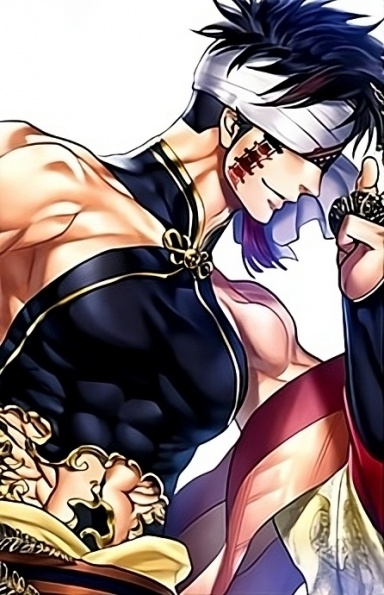
Sato Akira - The Fable
Akira Satou is an exceptionally skilled assassin known as the Fable. After years of operating as a professional killer, he is ordered by his employer to spend a year living an ordinary life in Osaka without killing anyone. He is given a new identity and must navigate everyday situations that are completely unfamiliar to someone whose life has revolved around violence and efficiency. His relationship with Yoko, who accompanies him and adopts her own cover identity, provides much of the contrast between his extraordinary professional abilities and his awkward civilian existence.
Akira's character is fascinating because his competence is so specialised that it becomes almost comical outside its intended context. He can assess threats, react to danger, and execute complicated actions with extraordinary precision, yet ordinary social interaction can leave him confused. He is not a typical cold assassin who secretly enjoys violence. His temperament is unusually flat, his humour is understated, and he often approaches everyday experiences with a kind of literal curiosity. The story uses this contrast to examine what happens when someone trained to function as a weapon is asked to become a person.
His appeal lies in the combination of deadpan comedy, overwhelming capability, and gradual engagement with ordinary human life. Akira does not need a dramatic personality to be interesting; his restraint is part of what makes him distinctive. The more he interacts with people outside his professional world, the more the reader sees that his apparent emptiness is not the same as an absence of humanity. He is a wonderfully controlled character, and his unusual relationship with violence gives the series a strong foundation for both comedy and tension.
VS
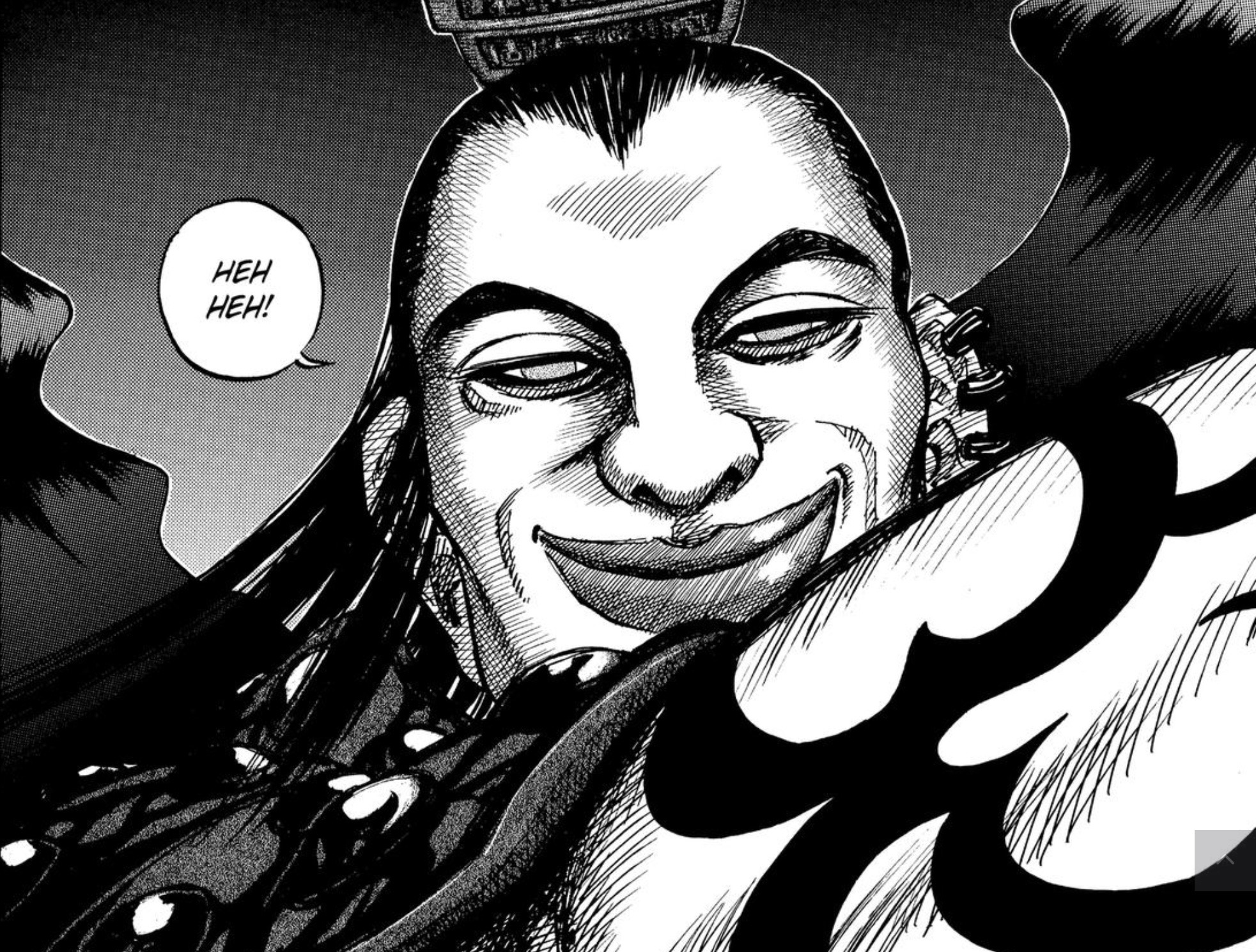
Ouki - Kingdom
Ouki is one of the legendary Great Generals of Qin, a figure whose reputation predates the events of the story. His enormous physical presence, distinctive manner of speaking, and apparent amusement make him seem almost theatrical at first. But beneath that exterior is a military commander with extraordinary experience, strategic intelligence, and an understanding of warfare that younger characters cannot yet comprehend. His connection to the previous generation of Qin's military establishment gives him a historical weight that few characters can match.
His relationship with Shin is central to his legacy. Ouki recognises the young man's potential, but he does not simply encourage him with empty praise. He exposes Shin to the reality of warfare and the responsibilities that come with commanding others. His own past, particularly his relationship with Kyou and the loss associated with it, gives his character an emotional dimension that contrasts with his usual composure. He has lived through enough conflict to understand both the glory and the cost of being a great general.
Ouki is memorable because he feels like a complete embodiment of an era. His strength is not merely physical, and his importance is not limited to the battlefield. He represents a standard of leadership that Shin aspires to reach, while also demonstrating that greatness comes with sacrifice. His charisma is enormous, but it is supported by genuine competence and emotional history. He is one of the characters who helps *Kingdom* make military ambition feel personal.
VS
Einar - Vinland Saga
Einar is introduced as a young man whose family and home are destroyed by Viking violence. He is captured and sold into slavery, where he meets Thorfinn and begins working alongside him on Ketil's farm. Unlike Thorfinn, Einar has not spent his life as a warrior. His experience of violence is primarily that of a victim, and his memories of his family and former life give him a different perspective on the world. His friendship with Thorfinn becomes one of the most important relationships in the story's second major phase.
Einar's strength is his emotional directness. He is capable of anger, grief, affection, and hope without disguising those feelings behind a warrior's code. He challenges Thorfinn when he sees him retreating into guilt and despair, but he also provides the companionship that allows Thorfinn to begin rebuilding his life. Their work on the farm is important because it gives them a shared purpose that has nothing to do with killing. Einar's desire for a peaceful life is rooted in what he has lost, not in an abstract philosophy.
Einar is an excellent supporting character because he provides both a moral contrast and an emotional foundation for Thorfinn's development. He is not a flawless symbol of goodness; he can be angry and impulsive, and his pain does not disappear simply because he finds a friend. His humanity is precisely what makes him effective. He represents the ordinary people whose lives are destroyed by the ambitions of warriors and rulers, and he gives the series' anti-violence themes a personal face.
VS
Pegasus - Goodnight Punpun
Pegasus, whose real name is Toshiki Hoshikawa, is the leader of a cult known as the Twelve Musical Scales. He claims to receive visions of the future through music and believes that the universe contains a vast record of events in the form of musical patterns. His followers become convinced that he has access to knowledge that ordinary people cannot perceive. In the context of *Goodnight Punpun*, his storyline initially seems almost absurd, but it gradually develops into a parallel narrative about belief, purpose, and the desire to find meaning in an increasingly unstable world.
Pegasus is interesting because the story does not treat him as merely a joke or a conventional cult villain. His grand declarations, eccentric behaviour, and seemingly ridiculous theories coexist with a genuine desire to prevent catastrophe. His followers are not simply interchangeable fools; their attachment to his mission gives them a sense of community and direction. His claims about the future and the Akashic records create an unusual atmosphere in which it becomes difficult to separate delusion, conviction, and the possibility that he understands something others do not. His storyline deliberately feels tonally different from Punpun's, yet it contributes to the manga's larger questions about meaning and human desperation.
His appeal is highly dependent on how one interprets his role in the story. He is not written with the same intimate psychological focus as Punpun, Aiko, or Sachi, but he adds an unusual dimension to the manga. His mixture of absurdity, sincerity, and apocalyptic conviction makes him memorable. Pegasus represents the human desire to believe that suffering and chaos are part of a larger pattern, and his storyline is one of the strangest ways *Goodnight Punpun* explores that desire.
VS
Meruem - Hunter x Hunter
Meruem is born as the King of the Chimera Ants, a being whose extraordinary physical and intellectual abilities place him far above ordinary humans. Initially, he views other living beings according to their usefulness and strength, treating the world as something that naturally belongs to him. His relationship with the human girl Komugi changes the direction of his development. Through their games of Gungi, he encounters someone who is physically fragile but possesses a skill and dedication that he cannot simply dominate.
Meruem's character arc is one of the most striking explorations of humanity in shonen manga. He begins with a worldview based on hierarchy, but his interactions with Komugi gradually reveal dimensions of value that cannot be measured through physical power. His growing attachment to her challenges the assumptions on which his identity was built. At the same time, his relationship with Netero exposes the darker side of humanity and complicates the idea that humans are inherently morally superior to the creatures they fear. His transformation is not simply from evil to good; it is a profound shift in how he understands existence.
Meruem is exceptional because his development is both philosophical and deeply personal. The relationship with Komugi gives his transformation an emotional centre, while the conflict with Netero forces the story to examine the meaning of humanity from opposing perspectives. His final moments are among the most affecting in the medium because the character who began as an embodiment of overwhelming superiority ends by valuing a relationship that has nothing to do with power. He is one of the strongest examples of a character whose entire worldview changes through a single human connection.
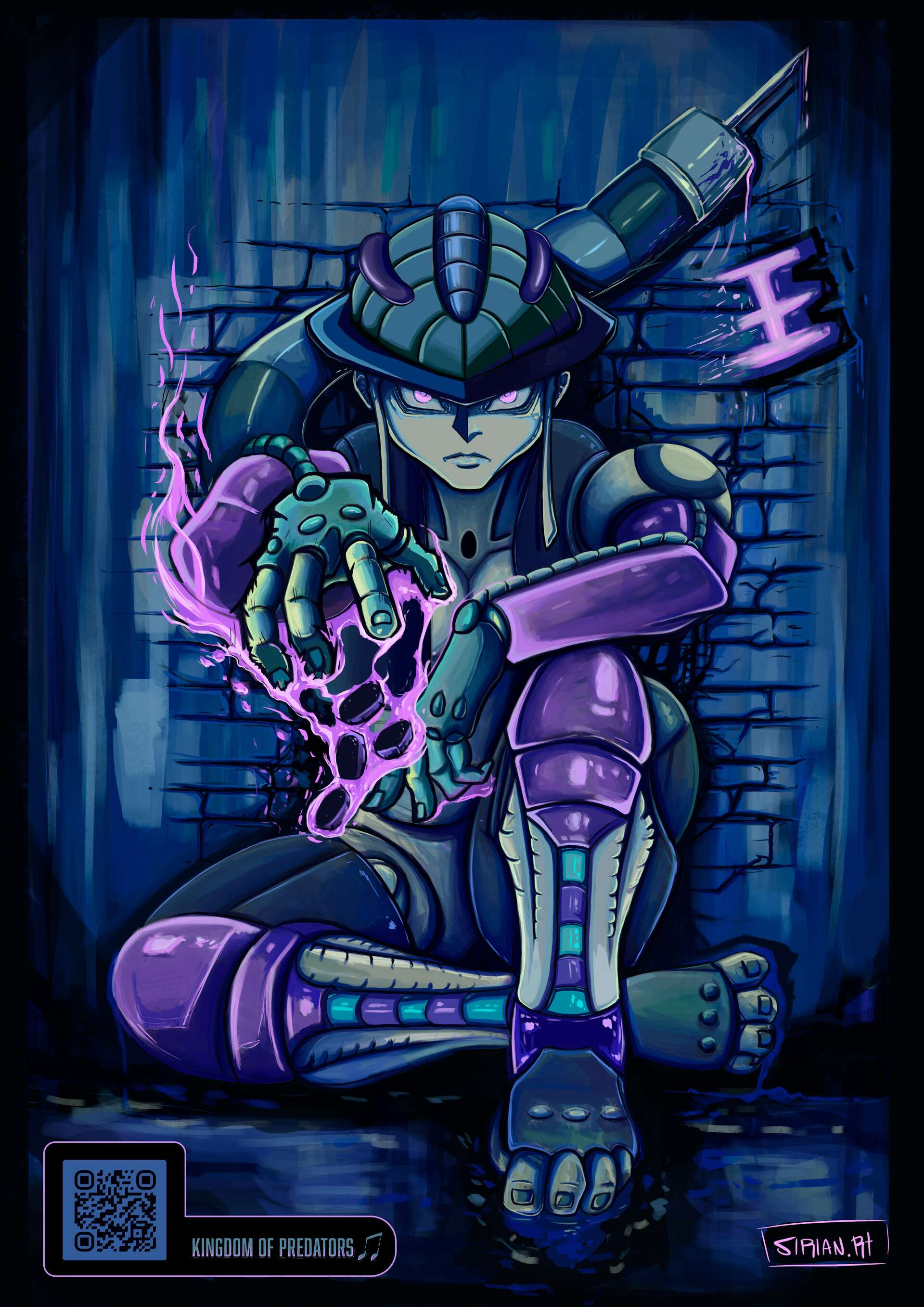
Meruem's character arc is one of the most striking explorations of humanity in shonen manga. He begins with a worldview based on hierarchy, but his interactions with Komugi gradually reveal dimensions of value that cannot be measured through physical power. His growing attachment to her challenges the assumptions on which his identity was built. At the same time, his relationship with Netero exposes the darker side of humanity and complicates the idea that humans are inherently morally superior to the creatures they fear. His transformation is not simply from evil to good; it is a profound shift in how he understands existence.
Meruem is exceptional because his development is both philosophical and deeply personal. The relationship with Komugi gives his transformation an emotional centre, while the conflict with Netero forces the story to examine the meaning of humanity from opposing perspectives. His final moments are among the most affecting in the medium because the character who began as an embodiment of overwhelming superiority ends by valuing a relationship that has nothing to do with power. He is one of the strongest examples of a character whose entire worldview changes through a single human connection.
@Fujishiro @Shiroyru @Jaguark101 @Natalija @Rej @Kizaruber Eats @zCoconut @EkkoLoJinx @Don Diego @Cross_Marian @Bullet @Dark-Abel @Poorsalino Cooker @GrandmasterChef Zonji @Yoho @Yo Tan Wa @50L1D @Marimo_420 @Red Night @RayanOO @The White Crane @MangoSenpai @God_Aizen @Alter @park_min young @Welkin
1. @Kizaruber Eats
2. @Jaguark101
3. @Poorsalino Cooker
4. @Mashiro Blue
5. @Owl Ki
6. @The White Crane
7. @Light D Lamperouge
8. @IceWitch
9. @Udell
10. @Devilbat
11. @Boiroy
12. @GrandmasterChef Zonji
13.
14.
15.
16
17.@Natalija @RayanOO @Marimo_420 @Lindltaylor @Dark Admiral @Jew D. Boy @Oblivion @GrandmasterChef Zonji @Jaguark101 @Luffy is the mc @imacub @mly90 @Koinboin @SHIHI @Kromage911 @hedera__helix @Reborn @Missy @AL sama @I'mTired @Gol D. Roger @Udell @Rivaille @NotTommy @Usopp Haoshoku Haki @Veku @Gari @Bounty @Gari @Doggo @Haoshoku @hime @Nana @Kizaruber Eats @SmokedOut @ConquistadoR ] @Seth @Ekkologix @SDfear @RobertoTheOharaSurvivor @Zara @Vonal [ @Peroroncino @Photon @SmokedOut @h_zorothegoat @Adam 🍎 @Sasparan @Black_Leg_Wanji @Inzziuma @Dr_Professor83 @Worst @Liquidhate @matt245 @Zoro CUCKSMOKE @Cross_Marian @MonochromeYoru @park_min young @ZoroMazino @Kagu Nyan @Admiral Maynard @DKI @DarkestKnightofSpoilers @Meeyori @Emmazrine @FloriGlori @SakazOuki @Paragorn @shastar-sei @DarkWitch
@Dark Admiral @Dark Hound @U c 4 up da idly @GrandmasterChef Zonji @Kvothe Kingkiller @Fisher Tiger @Light D Lamperouge @zorojurou @SHIHI @mugiwalaw @Robin swan @Owl Ki @style @Cinera @Luffy is the mc @Krusher1357 @Jaguark101 @Croci @Sslayer @ConquistadoR @Bepo @Shadowlord123 @Luslec @RayanOO @Liquidhate @TheAncientCenturion @Zoro CUCKSMOKE @kom5 @Fujishiro @Kucing Pencuri @Don DaSlayer @Yoru ] @Oblivion @Shisui @MonochromeYoru @Wuuuke @Utsuro @Missy @notAfanboy @Astolfo @NikaInParis @Mr.9000 @Courier @Kromage911 @Jorden625 @Akai2 @MUUGEN @Juliet @FreezyBreeze @Devilbat @PerfectHie @IceWitch @Power @NAMELESS @ZoroMazino @Tobra @BangOO🍅 @Gladwing0 @Warchief Sanji D Goat @Indigo @matt245 @Poorsalino Cooker @Warback @Bepo D. Bear @Elder Lee Hung
@FloriGlori @Leo @DizzyBrows @uyuu @Marimo_420 @Kucing Pencuri @Dark Hound @Arara @Yukihime @Zoro @Senfret @sidestreetboy @PerfectHie @Don DaSlayer @RobertoTheOharaSurvivor @DarkestKnightofSpoilers @ConquistadoR @Zoro CUCKSMOKE @SHIHI @Yo Tan Wa @Robin swan @Jorden625 @The White Crane @U c 4 up da idly @Astolfo @MUUGEN @Dr_Professor83 @Gladwing0 @Alpha @MonochromeYoru @Zoroe @Shadowlord123 @Butters @Dark Admiral @notAfanboy @NikaInParis @NAMELESS @Lhulu @Cross_Marian @Indigo @Nibel @Toby D. Dog @GrandmasterChef Zonji @Devilbat @The White Crane @Longleg Larry @ZenZu @Nibel @Mashiro Blue