
Introduction
The terms literalist and conceptualist describe two opposite ways of processing information, rules, language, or art.The core difference is that a literalist focuses strictly on the exact words, face-value details, or surface data, while a conceptualist looks beyond the surface to focus on the underlying ideas, intentions, context, or abstract meanings.
Imagination is an Asset
Literalism favors static elements (unchanging). A conceptualist on the other hand welcomes change. In One Piece, a literalist benefits from using a rigid structural foundation for rules to achieve power, but a conceptualist seeks to transcend the constraints of such a system. It is for this reason that Devil Fruit powers are entirely limited by the rigidity or lack of it in the mind (imagination).
Physics is Defied by Metaphysics
A literalist character prefers to work with standard physics, but a conceptualist will often interact with metaphysics. In this way, the author plays with the boundary between them. As readers, we are actually being put into situations where we explore that boundary and attempt to navigate plot developments. This creates friction between literalist and conceptualist readers in exactly the same way.
Powerscaling/Lorediving Mirror Literalism/Conceptualism
Powerscaling inherently relies on unchanging dynamics. It is considered highly inappropriate to provide an explanation for a character winning a fight based on creativity. It is not a scalable metric. However, in lore diving, the practice is to use narrative themes to predict events and assumes a potential for new developments.
The Mechanism of Innovation
Inherited will mechanically drives narrative motivation and establishes a framework for shifting power ceilings. When a new individual inherits a will, they apply a fresh perspective to evolve the associated dream. Conversely, when a will is not inherited, it becomes stagnant and outdated. This structural decay explains why the new generation is narratively destined to surpass the previous one through innovation.
The Evolution of Devil Fruits
As a result of Devil Fruits manifesting human dreams, they also change based on them too. Each time a character eats one, they are standing on the backs of giants, and engineering the next logical step because when a Devil Fruit encounters a new character that uses a new dream corresponding to it a shift in the conceptual elements therein occurs.
Conqueror's Haki is Conceptually Limited too
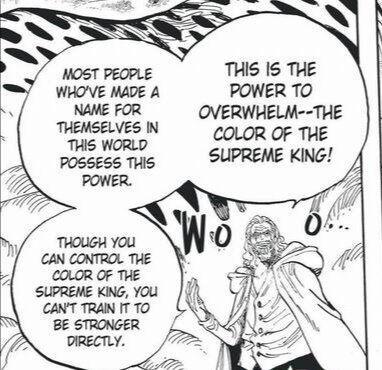
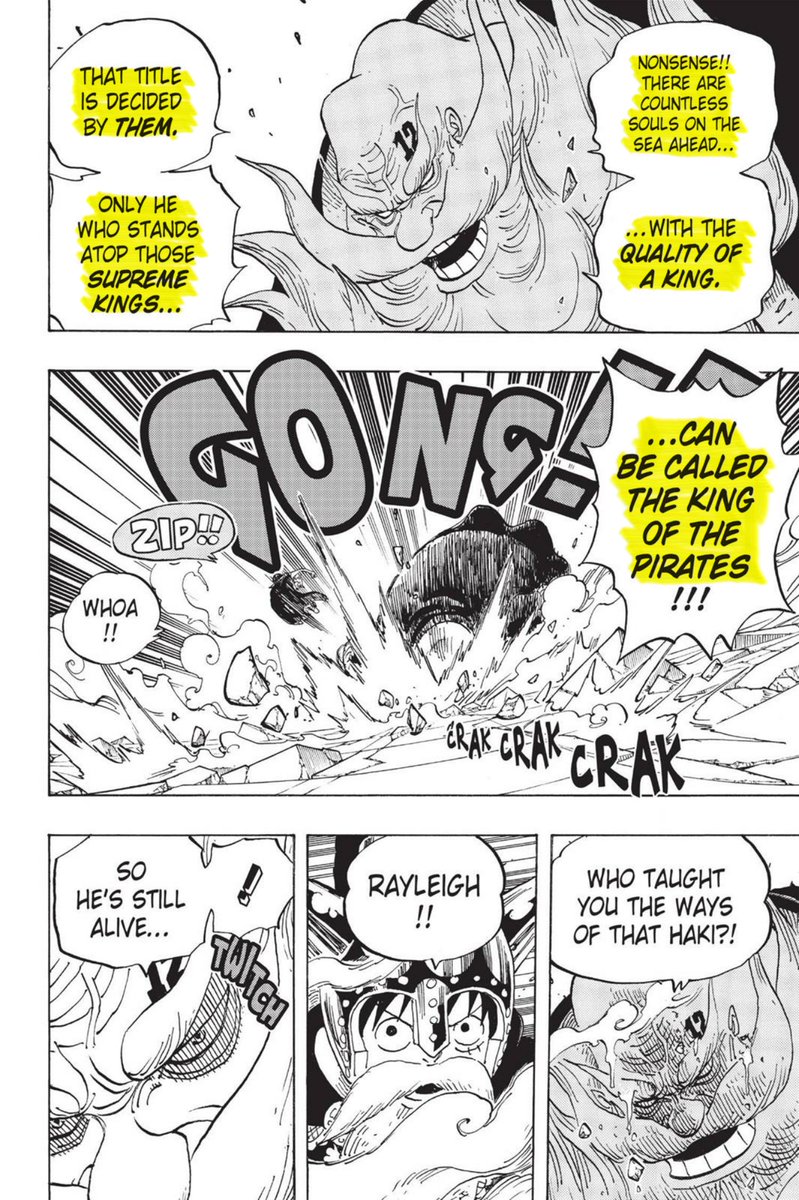
Haki is a very specific form of conceptualist power system. Characters in the story with Conqueror's Haki are chosen by Heaven itself. This means that their will and the dream they have frames the intensity of it. As a narrative element, it constitutes the importance of the characters to the overall plot and acts like a mechanism to define an elimination process.
The terms literalist and conceptualist describe two opposite ways of processing information, rules, language, or art.The core difference is that a literalist focuses strictly on the exact words, face-value details, or surface data, while a conceptualist looks beyond the surface to focus on the underlying ideas, intentions, context, or abstract meanings.
Imagination is an Asset
Literalism favors static elements (unchanging). A conceptualist on the other hand welcomes change. In One Piece, a literalist benefits from using a rigid structural foundation for rules to achieve power, but a conceptualist seeks to transcend the constraints of such a system. It is for this reason that Devil Fruit powers are entirely limited by the rigidity or lack of it in the mind (imagination).
Physics is Defied by Metaphysics
A literalist character prefers to work with standard physics, but a conceptualist will often interact with metaphysics. In this way, the author plays with the boundary between them. As readers, we are actually being put into situations where we explore that boundary and attempt to navigate plot developments. This creates friction between literalist and conceptualist readers in exactly the same way.
Powerscaling/Lorediving Mirror Literalism/Conceptualism
Powerscaling inherently relies on unchanging dynamics. It is considered highly inappropriate to provide an explanation for a character winning a fight based on creativity. It is not a scalable metric. However, in lore diving, the practice is to use narrative themes to predict events and assumes a potential for new developments.
The Mechanism of Innovation
Inherited will mechanically drives narrative motivation and establishes a framework for shifting power ceilings. When a new individual inherits a will, they apply a fresh perspective to evolve the associated dream. Conversely, when a will is not inherited, it becomes stagnant and outdated. This structural decay explains why the new generation is narratively destined to surpass the previous one through innovation.
The Evolution of Devil Fruits
As a result of Devil Fruits manifesting human dreams, they also change based on them too. Each time a character eats one, they are standing on the backs of giants, and engineering the next logical step because when a Devil Fruit encounters a new character that uses a new dream corresponding to it a shift in the conceptual elements therein occurs.
Conqueror's Haki is Conceptually Limited too
Haki is a very specific form of conceptualist power system. Characters in the story with Conqueror's Haki are chosen by Heaven itself. This means that their will and the dream they have frames the intensity of it. As a narrative element, it constitutes the importance of the characters to the overall plot and acts like a mechanism to define an elimination process.
Last edited: