One Piece 1151: That's enough! I've got this!
- Thread starter Mr. Reloaded
- Start date
More options
Who Replied?

that'd be crazy if usopp could do that?
i do think the glory will be reserved for the drums of liberation tho...
i do think the glory will be reserved for the drums of liberation tho...
Luffy and Imu are the ones playing the game, and the others are the game pieces that get turned.
If Usopp is a white piece, he could maybe do some sort of extraordinary act of bravery that embodies the spirit of Elbaf, and that starts the chain reaction of flipping the black pieces back to white.
Might need Usopp to be given some sort of G5 boost, which people will hate, but if it lets him do something big I’ll not be bothered.



Why are people forgetting we saw the exact same go board in Wano used to describe troop numbers?
The regen/immortality of the HK and gorosei is just a contract passed between them and Imu tying their lives together to abuse the fact that Imu got eternal youth / immortality surgery from the Ope Ope no mi.
A pact with the devil you could say.
The regen/immortality of the HK and gorosei is just a contract passed between them and Imu tying their lives together to abuse the fact that Imu got eternal youth / immortality surgery from the Ope Ope no mi.
A pact with the devil you could say.


intressting difference
Same font and title card reveal but one is not labeled as a DF
Does this mean Imu or a previous user of his powers has the power to create devil fruits?
[automerge]1749319650[/automerge]
Hi
any Toei color fans

any Toei color fans
@Salah WG I just thought that Imu could flip Loki and he could parallel zOars from Thriller Bark... 
These flips feel like Moriah's zombie soldiers and monster trio all had their shadows added to Moriah's army...
Could Imu flip all of them or some? Or the climb to the Sun Realm is the new climb to the rooftop?
These flips feel like Moriah's zombie soldiers and monster trio all had their shadows added to Moriah's army...
Could Imu flip all of them or some? Or the climb to the Sun Realm is the new climb to the rooftop?
Kaido Top 1 in choice of women at least. Based Kaido.
[automerge]1749327084[/automerge]
*looks at pantless Gunko*
:hapnoel::saden:
[automerge]1749327192[/automerge]
50 shades of neigh when?
[automerge]1749327292[/automerge]
Kyoraku Shunsui approves. Honestly I love games as powers, such a brilliant concept with immense versatility and creativity.
[automerge]1749329578[/automerge]
Isn't it interesting we have Imu playing Reversi and before we had CP0 and thus Mr Go (Guernica) playing Go, a similar game ofc? Sabo used a chess named move vs Imu, Kaido themed his crew around casino/card games, Big Mom had her death roulette and her version of trick or treat or even truth or dare (don't play spin the bottle with her) and the holy knights like to "play games" too? Not to mention Davy back fights and their importance too?
I could see Blackbeard running Davy Back fights but more lethal, high stakes like squid game or any death games too. Lafitte and Doc Q definitely too. Maybe Shiryu and Devon.
Oda brought back Foxy recently too.
Yes, Go, Othello, and Reversi are all different games, though Othello and Reversi are very closely related.
Here's a breakdown:
* Go:
* Origin: Ancient China, over 2,500 years ago.
* Objective: To control more territory on the board than your opponent by surrounding empty intersections with your stones.
* Gameplay: Players alternately place black and white stones on the intersections of a grid (typically 19x19 lines). Stones are captured by being completely surrounded. The game ends when both players pass, indicating no more territory can be gained.
* Key characteristic: Focus on surrounding and territory control.
* Othello / Reversi:
* Origin: Reversi was invented in England around 1880. Othello is a specific, modernized variant of Reversi patented in Japan in 1971.
* Objective: To have the majority of your colored pieces on the board at the end of the game.
* Gameplay: Played on an 8x8 grid. Players take turns placing a disc (black on one side, white on the other) on the board. A move is only legal if it "outflanks" one or more of the opponent's discs, meaning it traps them between the newly placed disc and another disc of the player's color. All outflanked discs are then flipped to the player's color.
* Key differences between original Reversi and Othello:
* Starting position: Othello has a fixed starting setup (four discs in the center, two of each color diagonally). Original Reversi had players placing the first four pieces.
* Passing: In Othello, if a player cannot make a legal move, they must pass their turn. In some older versions of Reversi, the game ended if a player couldn't move.
* Key characteristic: Focus on "sandwiching" and flipping opponent's pieces.
In summary, Go is a distinctly different game with a focus on territory and surrounding, while Othello is essentially the most popular and standardized version of Reversi, a game centered around flipping discs.

Why is the Manga put 2 names Kilingham and Qilingham? Why does he go pants-off when the Great Imu arrives.
:hapnoel::saden:
[automerge]1749327192[/automerge]
Neighhhhh
[automerge]1749327292[/automerge]
Imu ate a game devil fruit
Those rules has infinite possibilities like making someone immortal, strong, reverse them. Like using uno reverse, checkmate, turning a footsoldier to chess Queen, en passant, sacrifice, Get Out of Jail Free , Extra Life, Pause Game, God mode, Cheat Code, Snake Eyes from dnd etc. Idk i think Imu's power has a condition that she must bring people into the game and then she can set rules. In dorry and brogy, she used dory's hand as sacrificial price to activate power i think.
Those rules has infinite possibilities like making someone immortal, strong, reverse them. Like using uno reverse, checkmate, turning a footsoldier to chess Queen, en passant, sacrifice, Get Out of Jail Free , Extra Life, Pause Game, God mode, Cheat Code, Snake Eyes from dnd etc. Idk i think Imu's power has a condition that she must bring people into the game and then she can set rules. In dorry and brogy, she used dory's hand as sacrificial price to activate power i think.
[automerge]1749329578[/automerge]
Isn't it interesting we have Imu playing Reversi and before we had CP0 and thus Mr Go (Guernica) playing Go, a similar game ofc? Sabo used a chess named move vs Imu, Kaido themed his crew around casino/card games, Big Mom had her death roulette and her version of trick or treat or even truth or dare (don't play spin the bottle with her) and the holy knights like to "play games" too? Not to mention Davy back fights and their importance too?
I could see Blackbeard running Davy Back fights but more lethal, high stakes like squid game or any death games too. Lafitte and Doc Q definitely too. Maybe Shiryu and Devon.
Oda brought back Foxy recently too.
Yes, Go, Othello, and Reversi are all different games, though Othello and Reversi are very closely related.
Here's a breakdown:
* Go:
* Origin: Ancient China, over 2,500 years ago.
* Objective: To control more territory on the board than your opponent by surrounding empty intersections with your stones.
* Gameplay: Players alternately place black and white stones on the intersections of a grid (typically 19x19 lines). Stones are captured by being completely surrounded. The game ends when both players pass, indicating no more territory can be gained.
* Key characteristic: Focus on surrounding and territory control.
* Othello / Reversi:
* Origin: Reversi was invented in England around 1880. Othello is a specific, modernized variant of Reversi patented in Japan in 1971.
* Objective: To have the majority of your colored pieces on the board at the end of the game.
* Gameplay: Played on an 8x8 grid. Players take turns placing a disc (black on one side, white on the other) on the board. A move is only legal if it "outflanks" one or more of the opponent's discs, meaning it traps them between the newly placed disc and another disc of the player's color. All outflanked discs are then flipped to the player's color.
* Key differences between original Reversi and Othello:
* Starting position: Othello has a fixed starting setup (four discs in the center, two of each color diagonally). Original Reversi had players placing the first four pieces.
* Passing: In Othello, if a player cannot make a legal move, they must pass their turn. In some older versions of Reversi, the game ended if a player couldn't move.
* Key characteristic: Focus on "sandwiching" and flipping opponent's pieces.
In summary, Go is a distinctly different game with a focus on territory and surrounding, while Othello is essentially the most popular and standardized version of Reversi, a game centered around flipping discs.
Last edited:
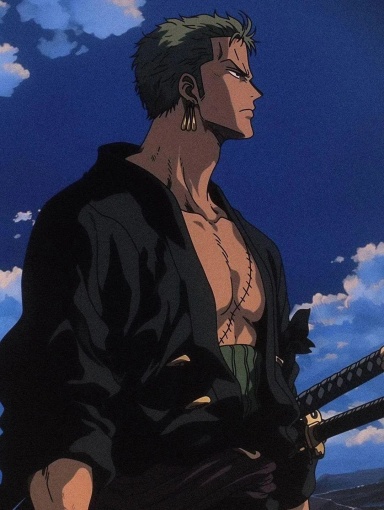
@Salah WG I just thought that Imu could flip Loki and he could parallel zOars from Thriller Bark...
These flips feel like Moriah's zombie soldiers and monster trio all had their shadows added to Moriah's army...
Could Imu flip all of them or some? Or the climb to the Sun Realm is the new climb to the rooftop?
These flips feel like Moriah's zombie soldiers and monster trio all had their shadows added to Moriah's army...
Could Imu flip all of them or some? Or the climb to the Sun Realm is the new climb to the rooftop?
Imu feels more like Sugar or Perona or Miss Golden Week ... etc
I have so many Scenarios in my head, but for starters, what We can agree on, is that Oda is clearly Hyping Loki way too much, He just brought WG's Final Boss to Elbaph & yet He still ends Chapters with Loki Teasers,
Loki turning Evil is definitely a Possibility, He would be Imu's Masterpiece, but the guy already has everyone as his Enemy & Hater, what's the point of making his Situation even worse for him? I think Imu's Hax doesn't work on Loki for same reason Perona's didn't work on Usopp, He is simply already Pure Evil (At least in his Thoughts, regardless if his Heart is Good),
But i will be honest with you, would you ever expect that a Princess or Royalty would show up on Luffy's Island complaining about her Kingdom under Attack, and think that it's not Luffy who's gonna answer the Call?
I said this Three Years ago:
So while Luffy is in Mary Geoise, it's gonna get attacked by BB Pirates, Zoro in Impel Down will meet Cross Guild and Sanji will meet Red Hair Pirates. As for their main fights, King of Hell will face Magellan (I can prove it if interested), Warrior of Science gonna fight Lucci (Proven by Power Rangers) and Sun God gonna fight Kizaru (Finally getting his Revenge)
These three simultaneous Arcs will also be used to introduce Imu, Lurking Legend and other Villains I won't reveal now (Think of them as Final Villains Team, it will be similar to CP9 Reveal)
During all of this, we are gonna witness Destruction of Fishmen Island by Lurking Legend wearing the Bigger Straw Hat, Zoro gonna be a witness, and once all M3 escape their Islands, they all meet in Marine HQ where they will clash with Akainu, Fuji and Ryo before escaping (Just short clash)
All of this will end with the reveal that Final War must happen in Elbaf cuz that's where Villains are headed,
These three simultaneous Arcs will also be used to introduce Imu, Lurking Legend and other Villains I won't reveal now (Think of them as Final Villains Team, it will be similar to CP9 Reveal)
During all of this, we are gonna witness Destruction of Fishmen Island by Lurking Legend wearing the Bigger Straw Hat, Zoro gonna be a witness, and once all M3 escape their Islands, they all meet in Marine HQ where they will clash with Akainu, Fuji and Ryo before escaping (Just short clash)
All of this will end with the reveal that Final War must happen in Elbaf cuz that's where Villains are headed,
I always believed Monster Trio will get Separated from Rest in Final Saga, and that Mary Geoise would be Attacked, and that's where the Trio would be needed (I even Predicted that during this Time, We would get Introduced to Imu, CP-9 Like Group & other Villains)
After that, i said that this Mary Geoise Conflict will serve to force everyone out & make them decide where They wanna stand for Final War, and then They learn that the Final Battle must happen on Elbaph, which is indeed what Mural showed, so imagine my reaction seeing Imu arrive to Elbaph complaining about Mary Geoise being Attacked while Monster Trio are Separated from Rest & there are some kind of Portals around (Previously i thought Kuma would send them, which is still an option btw, as He did visit Mary Geoise before),
How would Mary Geoise lead to Elbaph being Location of World War? By simply using Abyss Portal on entire Island to send it to Heaven World, in other words, Mary Geoise will be Re-Located to Heaven World imo, where every Single Major Faction or Character will decide to go,