I'm not going to continue to debate you until you stop pretending to be an authority. You literally have no understanding of Anatomy of a Story, and it shows in your arguments here and your comprehension of One Piece in general. I'm sick of you touting this, as if it makes you aware of "high end story telling concepts" that the rest of us aren't. For God's sake, you're not the only one who's read Anatomy of a Story. Your One Piece arguments are terrible because you think you know what you're talking about, but you clearly either misread, or didn't actually read "your bible". You want to debate? Let's first debate Anatomy of a Story, since you're not the only one who has a liturature degree.
So you DID read it.. okay, so this is indeed not a gap of knowledge.
I may have no understanding of the AoS, maybe, I'm not arguing that. Here I'll be arguing for the content and what the decades of studying that (and others litteratures) taught me. So buckle up. Cause this time we are entering DEEP in the subject as I will consider that you have precisely the knowledge. (this may not be related only to AoS)
So. first, I'll ignore the invectives and get on the subjects:
"Writers often mistakenly think of the opponent, also known as the antagonist, as the character who looks evil, sounds evil, or does evil things. This way of looking at the opponent will prevent you from ever writting a good story.
Instead you must see the opponent structurally, in terms of his function in the story. A true opponent not only wants to prevent the hero from achieving his desire but is competing with the hero for the same goal.
Notice that this way of defining the opponent organically links this step to your hero’s desire. It is only by competing for the same goal that the hero and the opponent are forced to come into direct conflict and to do so againg and again throughout the story. If you give your hero and opponent two separate goals, each one can get what he wants without coming into direct conflict. And then you have no story at all."
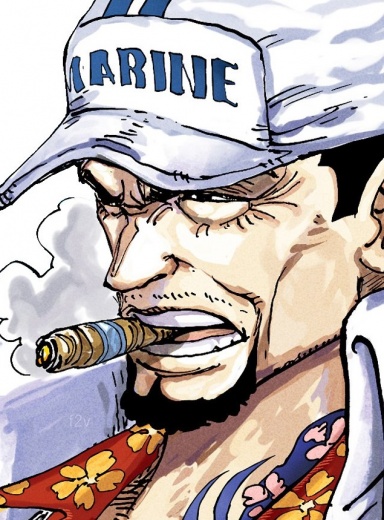
Does Oda follow this? No he doesn't. Look at the arc villains in One Piece, and almost none of them have the same goal as Luffy. They almost always have conflicting goals instead. Helmeppo just wants Zoro dead, Luffy wants to save him. Enel wants to destroy skypeia, Luffy wants to save it. Akainu wants to end the great pirate era by killing Ace, Luffy just wants to protect Ace.
Here is your first mistakes, you don't read AoS as a writer but as a reader. A simple reader can't understand at first glance what Truby is actually talking about here. because he doesn't need to understand the real importance of putting two similar desires in two completely different protagonists. Because it's not that easy to do, when creating a story similar to the story of Sanji for exemple; But, then, you understand that it not what Truby is saying here and you look closer to his writings:
(Here i'm translating from french and an old version, so you will excuse me if it might be different from what you have)
First there is this quote, that is primordial to understand that the real conflict between a character and it's antagonist/adversary is between the values first:
Characters
- Build the conflict
- 3 - The four character's value must enter in conflict
- "To tell a good story, it is not enough to create conflicts between the characters. You have to create conflicts between the characters and their values. [...] With the Standard method of opposition, two characters - the hero and a single opponent - fight for the same objective. And in the course of their confrontation, their values - as well as their ways of life - also come into conflict."
Now, there is that paragraph, this one took me a LONG time to understand as it is not highlighted, it's just a passing paragraph. On my first read I did not catch it, on the second neither.. I had to deconstruct the entire book to understand that their was actually a little paragraph there that was STELLAR important for the comprehension of the desire between a character and the antagonist(s). Without that, you can't understand how two completely different purposes (of the characters) in theory are in fact hidding the same strong desire.
The seven key steps of the narrative structure:
- 3. Adversary:
" - When you think about some good stories, you often get the impression, at first glance, that the hero and the adversary are not trying to achieve the same goal. But we have to study things in more depth. Try to determine why the two characters are fighting. [...] the real reason they are fighting is the version of reality that everyone else will believe.
The trick to creating an adversary seeking to achieve the same goal as the hero is to find the deepest stage of the conflict between them.
Ask yourself, "What is the most important thing they are fighting for?"
Like that, it appears logical, a bit non important.. but as a writer, this is one the most important advice there is. Let's see how it applies to One Piece (and the baratie arc) and you will see that
yes.. Oda is indeed using that principle. Instinctively or not .. that I don't now .. yet.
Let's took first the example you gave me: (
note that here I'll be doing some analysis (and hard ones) on the nose, it might not be completely accurate)
FIrst, let's look at the values in conflict and let's see if we can find a common desire.
Helmeppo VS Zoro:
- Honor
- Justice
- The usage of Power
- Usage of Fear
- Truth
(notes how all those values are important as a first mate .. )
Here.. with the lecture of those chapter, something becomes clear very fast. All of them fighting for the same thing:
Respect.
You could word it otherwise: They are all fighting to be respected.
With Zoro, this struggle will come mostly out of his flashback, but also by his action with the dog and him accepting to be arrested.
For Helmeppo, it the same but in a different way, you see Helmeppo's view of Power is compromised by the fear of his Dad.. and slowly but surely during this little arc, Helmeppo will loose the respect for the inhabitant, the marines but mostly FROM HIS DAD. That will break him, to a point where all he will try to do is regain that respect. (this is something of course that he will never gain from characters like Luffy or Zoro, but he will get that from Koby)
The search for respect is what drives those character, Helmeppo wants to be respected for the wrong reasons, and Zoro want to become so respected thathe will be able to echo his name right through the other world. (Look at most Zoro's interactions and fight, and you will see that the notion of respect is something primordial to his character)
Luffy VS Enel
- Strenght
- Usage of Power
- Freedom
- Determination
- Dream
Enel and Luffy are both fighting to
find a treasure. Careful, when I say treasure I'm not saying "a box with gold in it". The treasure here is a dream, a promise so important to them that they will do everything to make sure that this promise is fullfiled. And this promise takes the form of the Big bright Golden Bell.
For Ener, it's will be the fairy vearth. The moon. The promise of becoming a true God among god.
For Luffy it will be to find the truth and ring the bell in order to prove to the world that:
Akainu VS Ace
- Loyalty
- Justice
- Power
- Control
For those two, the goal is more visceral. They will both fight to
defend their
vision of Piracy
This one would need a little more research to be complete. But mainly it's that. This conflict is pretty straightforward and very quick.
The problem in that conflict is that Akainu will be the attacker.. and that Ace should have never accepted the conflict. B y trying to defend Whitebeard and his vision of piracy, Ace is actually playing in the game of Akainu who's vision is very strict : All Pirates are scumbag. (Note that the conflict that will oppose Aikanu and Aokiji will also be related to a similar objectif but this time their vision of justice)
Both Ace and Akainu's objectif is white beard, one wants to protect it, the other destroy it.
----
As you can see in each of your exemple, the main antagonist and the protagonist are fighting exactly for the same thing, but this is burried under layers of storytelling. This is a very important thing to understand as a writer.
Now let's see some other exemple (I'll be brief, so buckle up)
Katakuri Vs Luffy - Not only Oda here push the button very far by making those two character very similar until their very power.. but he also reenforced this fight by the values that were in conflict. Which ones ?
Family
Protection.
Luffy and Katakuri here are fighting for the same thing: To protect their family. katakuri is basically the ultimate challenge for the goals Luffy put on himself two years before.
Gin VS Sanji
- Loyalty
- Kindness
Here, it's more personnal, they are fighting for their "
father's wishes" or
what they think their "father" want from them (the nuance is important) because of the respect they have for them. Sanji will defeat Gin only by being the nicest person possible. Gin will be unable to fullfill his captain wish, and will be completely devastated by it.. But this also what will make him grow over this toxic relationship (this is Gin who will put an end to Krieg). During that Arc, Sanji will understand through his conflict with Gin and the impact of Luffy .. that what his father wants in fact from him, is not to replace him or be by his side at the restaurant.. but just.. to be happy and to live his own live.
(annnnnd.. i'm tearing up. FUDGE ODA)
let's see.. one more.. not an obvious one.. hm ..
Usopp VS Sugar
- Loyalty
- Courage
This one will be simple. What Usopp and Sugar are really fighting for are
memories. Sugar wants to take them away, and Usopp wants to keep them. Ultimately (and indirectely) the battle will converge on the memories of Luffy.. this will be what will pushes Usopp over the Edge and awaken his observation Haki. A world without Luffy would be unimaginable for Usopp, that's why the sniper shot of Dressrosa is one of the most loyal and powerfull actions of Usopp.
Here.. So as you can see.. those shared desire are everywhere.. (With enough time their would be a myriad of exemple) Oda knows perfectly that a strong conflict oppose different visions of similar values and that in the end, all conflict have pretty much the same desire between them.. Sometime it's very well hidden.. but it's still there.
The conclusion? One Piece isn't the literary masterpiece you think it is. It's a fucking shonen manga for little kids filled with fart jokes and gag villains.
You're trying to force the story to adhere to what makes good literature, and making backwards arguments to fit that because you think Oda is a literary genius when he's not. He's just good at writing a fun story aimed at kids. The real answers to our arguments are much simpler if we don't have to force it into Truby's mold like a square block through the circle ring
I can go into tons of different ways that One Piece is nearly the opposite of what Truby would consider a good story, but hopefully this will be enough. Once you accept that your starting premise is flawed, we can have a real debate.
Honestly, anyone who knows anything about literature would laugh you out of the room if you tried to bring One Piece up in the same breath as Anatomy of a Story. Stop pretending, and learn that you are not the most educated person in the room.
And I just proved you wrong.. One Piece IS the literary masterpiece we all think it is, and it's even more... THe real question is : does it come naturally to Oda or not, the answer to the question is unknown. Truby would be actually thrilled to see how well Oda is understanding his concepts (if he knows them at all lmao)
I hope I managed to make you understand my point and lessen the bad appriori you had on me. Remember:
I will stop pretend to be an authority when people will at least understand the rules they are currently debatting with.
[automerge]1642223035[/automerge]
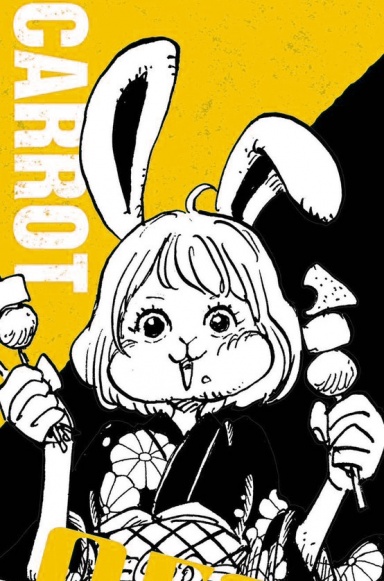
Unlike you who make ridiculous comparisons between Carrot and characters who have been on the crew since the fucking Pre timeskip and base your arguments on favoritism, here goes: Carrot was introduced 3 arcs ago, and during those 3 arcs (Zou, WCI, Wano ) she hasn't developed enough to be considered a Nakama. In Zou Momonosuke is more protagonist than her, besides that Zou is a Pre Wano and a Pre WCI that is, Carrot is a secondary in his own intro arc. In WCI (which is Sanji's arc and not Carrot's) its development only really happens at the end and because of Pedro. In Wano she was practically erased that is after the end of the alliance between minks / samurai / pirates Oda has no plans for her in the future unless she returns only in the final war. You spend so much wondering how she's going to join the crew, but never wondered if she should join the crew? what would be the relevance of Carrot to the crew at the current moment? she's not strong enough to fight New World characters (her Sulong mode only served to take down ships), she doesn't have any specialties or anything that stands out (don't you dare compare her to Usopp because he's a character that Oda writes since the beginning of the fucking series, and is much more complete than her). If she's going to be a simple and invisible character in the arcs, then go back to Zou and only return in the Final War(being very generous).:cheers::cheers:.Stop wondering how she's going to join the crew, and start asking if she should join the crew. Start to ask if Straw Hats realy NEED TO HAVE MORE MEMBERS.
Yes she has.. Now I'm waiting for an answer:
Do you have proof that Carrot wants to go back to Zou ? (Panels please)
[automerge]1642223235[/automerge]
Its really amazing this irrelevant weak character is discussed so much. Its mostly because she has "special" fans. And we all know why they like Carrot... Sigh
There is nothing wrong with liking a character for whatever reason, but stop talking about her for once please! She's not even a side character anymore. Please dear god can we discuss other characters? One Piece has sooo many characters...
Wrong. This character is discussed so much because she (Carrot) is the most likely potential to be a Nakama next. Also she is very interesting and has an intersting construction.